
What Did Eleanor of Aquitaine Really Look Like?
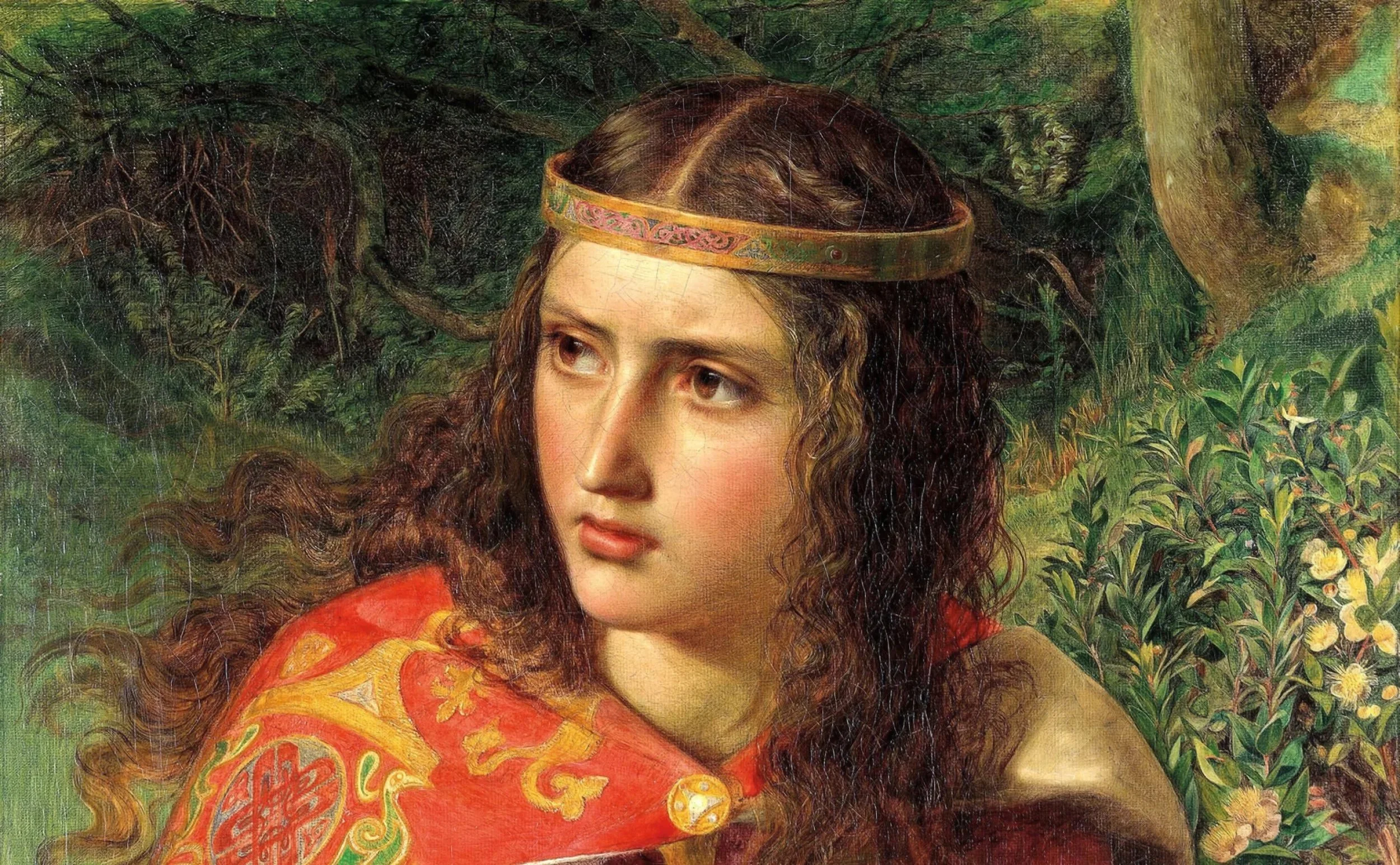
She was Queen of two countries, mother of two kings, and by all accounts, one of the most captivating women of the Middle Ages. But nearly a thousand years after her death, one question remains stubbornly unanswered: what did Eleanor of Aquitaine actually look like?
The short answer? We don't really know. And the way historians have tried to fill in that blank says almost as much about them as it does about Eleanor. Full video here.
Eleanor was born in Bordeaux sometime between 1122 and 1124 — even her birth year is uncertain. She went on to become one of the most powerful figures of the High Middle Ages, marrying two kings (Louis VII of France and Henry II of England), bearing heirs to both thrones, and continuing to wield real political influence even into old age. She died around 1204, roughly 80 years old, having outlasted almost everyone who knew her.
And yet, for someone who shaped the fate of nations, the historical record is almost eerily thin. Most of what we know about Eleanor comes from accounts written about the men in her life, or from documents composed decades after the events they describe. Scholars have noted that the absence of primary source material about her is almost suspicious — as though her legacy was quietly suppressed.
Making matters worse, chroniclers in her own era had mixed motives. Some admired her; others were engaged in a deliberate PR campaign to discredit the Angevin royal lineage. Later writers in the 17th and 18th centuries picked up those slanders and embellished them freely, casting Eleanor as an adulteress, a sorceress, even a murderer. Those stories have proven remarkably sticky.
What People Actually Said About Her
Despite the thin documentary record, enough people were clearly struck by Eleanor's appearance to leave a few traces behind.
Two chroniclers from her era — Richard of Devizes and William of Newburgh — describe a beauty who aged remarkably well. One reaches for the Latin word perpulchra, meaning "more than beautiful," as if ordinary language fell short. A German poet who glimpsed her briefly was so affected that he wrote that he would give up the whole world from sea to Rhine just for her company. And Matthew Paris, writing about a century after her death, claimed that "by reason of her excessive beauty, she destroyed or injured nations."
What none of them thought to record, unfortunately, was anything as practical as her hair color or eye color. That particular detail went undocumented, which has left modern historians to speculate — and speculate they have, wildly and without much agreement.
The Biographers' Eleanor: A Study in Projection
Here is where things get a little awkward. Faced with a complete absence of evidence, Eleanor's biographers have effectively invented her appearance, each arriving at a different woman:
W.L. Warren calls her a "black-eyed beauty."
Frank McLynn goes further: dark skin, black eyes, black hair, and a curvaceous figure.
Desmond Seward goes in the opposite direction entirely, describing yellow hair and blue eyes.
Douglas Boyd lands on long auburn hair and green eyes.
Alison Weir suggests red or auburn hair — and has at least a little something to back her up.
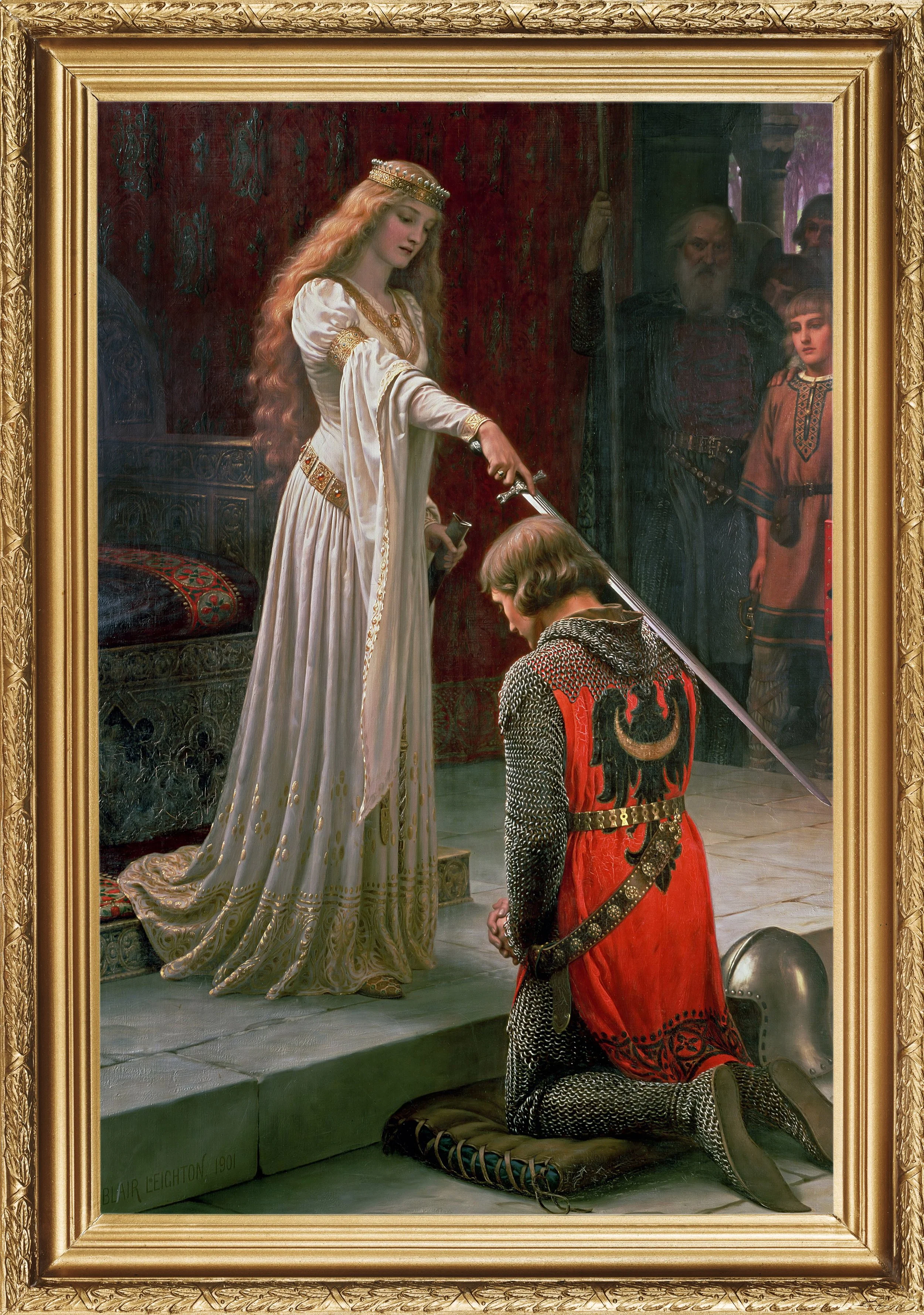
In 1964, a piece of plaster fell from a wall in a chapel in Chinon, France, revealing a mural thought to date to the 12th century. It shows two crowned figures, and some scholars believe one could be Eleanor, depicted with auburn hair. However, other experts — including prominent Eleanor biographer Elizabeth Chadwick (shoutout to her amazing blog) — have pointed out that the clothing on the figures appears to mark them as male, casting serious doubt on the identification.
After this level of research, it's hard not to conclude that each biographer simply pictured their own Eleanor and wrote her down.
Just my two cents - I believe Eleanor likely had blonde or light hair and light eyes. I think this simply because Eleanor was lauded for her beauty, and those were the beauty standards of the time.
Let’s talk about what Eleanor would have worn and how she would have styled her hair.
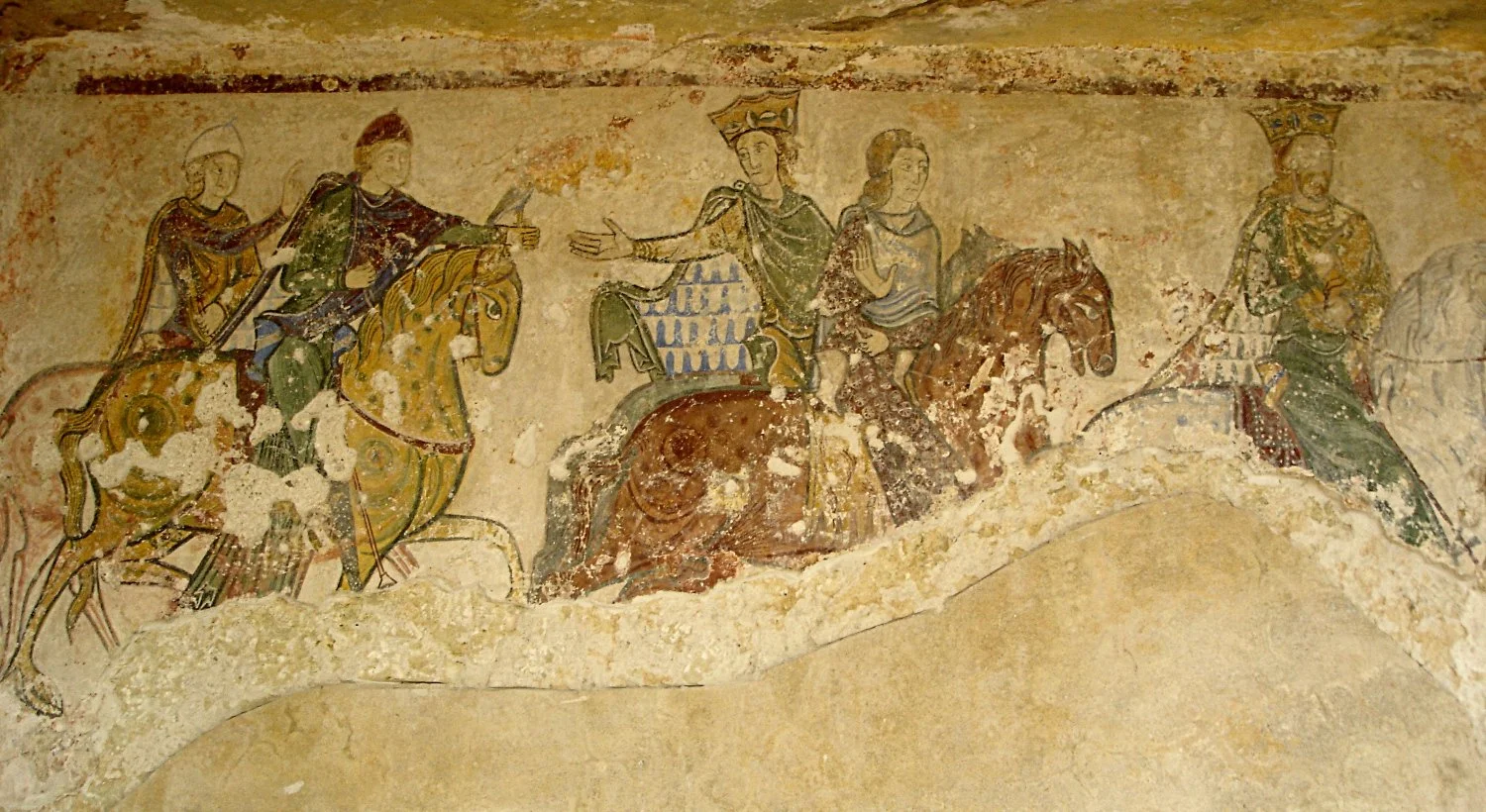
Around the turn of the 12th century, noble fashion took a flattering turn. Women started wearing the bliaut, a style that was surprisingly comfortable compared to the heavy, restrictive layers of later centuries. There were no corsets or excessive layers - just a soft linen shift worn under a slim-fitting gown. These dresses were often made from a single, flowing piece of fabric with dramatic, flared sleeves. If you’ve ever seen the famous painting The Accolade by Edmund Blair Leighton, that’s exactly the 'medieval princess' silhouette we’re talking about.
The waist would be accentuated with a cloth belt, creating a look that’s still pretty flattering by today’s standards.
As Queen, Eleanor would have worn soft linen or silk, unlike the basic wool of the lower classes. She’d have access to vibrant red and deep blue dyes.
When the weather turned cold she could don a fur mantle for warmth. Surprisingly, the most prized fur of the time was Squirrel.
In terms of hairstyles, this era was also rather relaxed. Women would wear one or two long braids, sometimes even adding to these with extensions if they were wealthy enough!
Married women still had to wear a veil to cover their hair, and in this time they included a chin strap called a wimple, but they weren’t as modest as you might think. Some strands around the face and braid were allowed to peek out, giving the look a softer feel.
The Only Real Evidence: Her Tomb
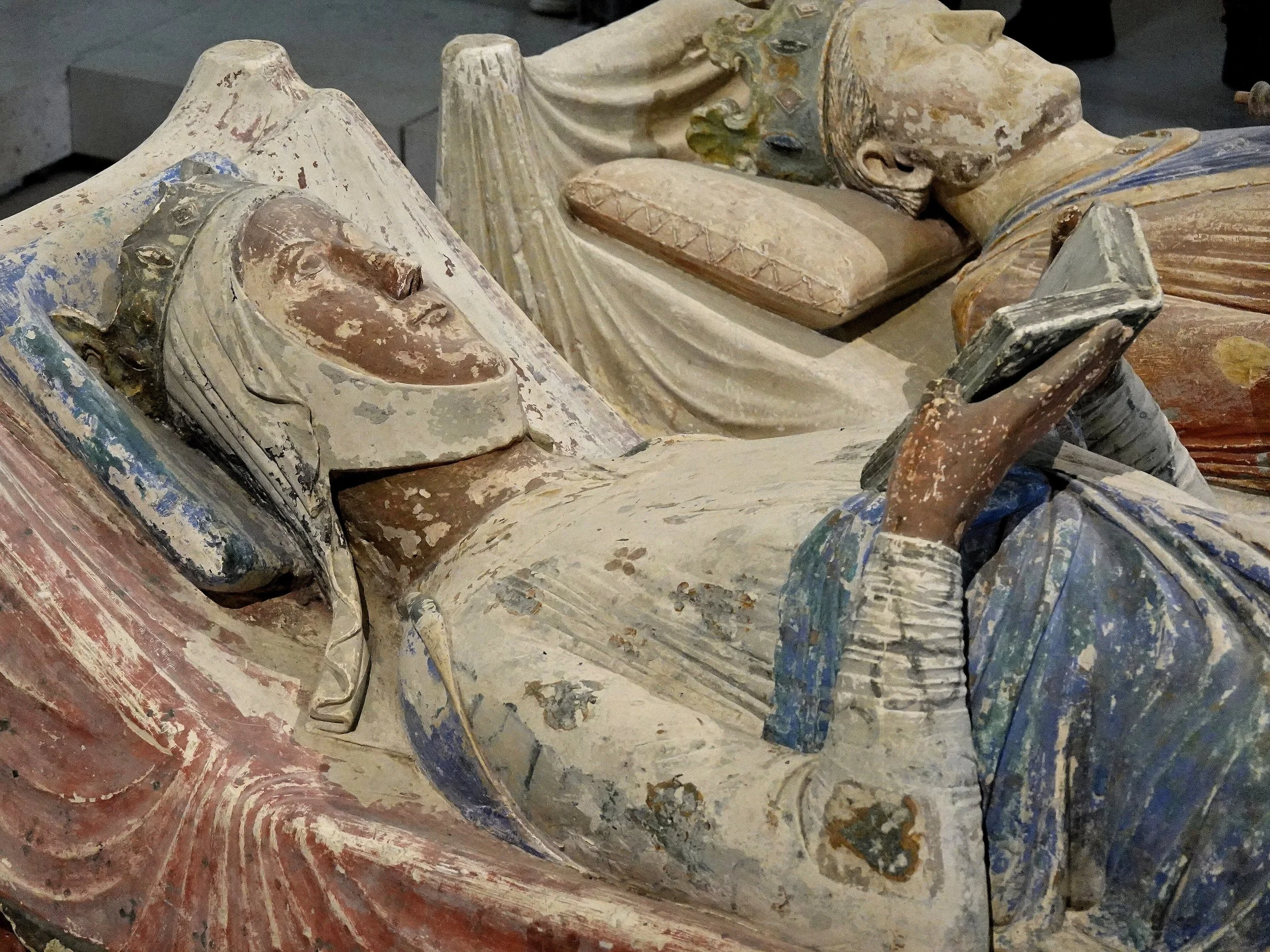
What we do have is Eleanor's effigy at Fontevraud Abbey in France — a stone sculpture carved near or around the time of her death.
Because Eleanor lived such a long life and was a woman of considerable power and resources, it's likely she had a say in how she would be depicted. Unsurprisingly, she is shown in her prime rather than at her true age of around 80. The effigy clearly presents a tall, slender woman with long, elegant features — but centuries of wear have taken their toll, and fine details are difficult to make out.
What the effigy does confirm is a sense of dignified, refined presence. Whether her hair was dark or fair, her eyes light or dark, it projects authority and composure — which, given everything history tells us about Eleanor of Aquitaine, seems entirely fitting.
My Reconstructions
Since the Tomb Effigy is so damaged, I wanted to make some “cartoon” sketches of it in Photoshop, just to get a better feel for what I was really looking at.
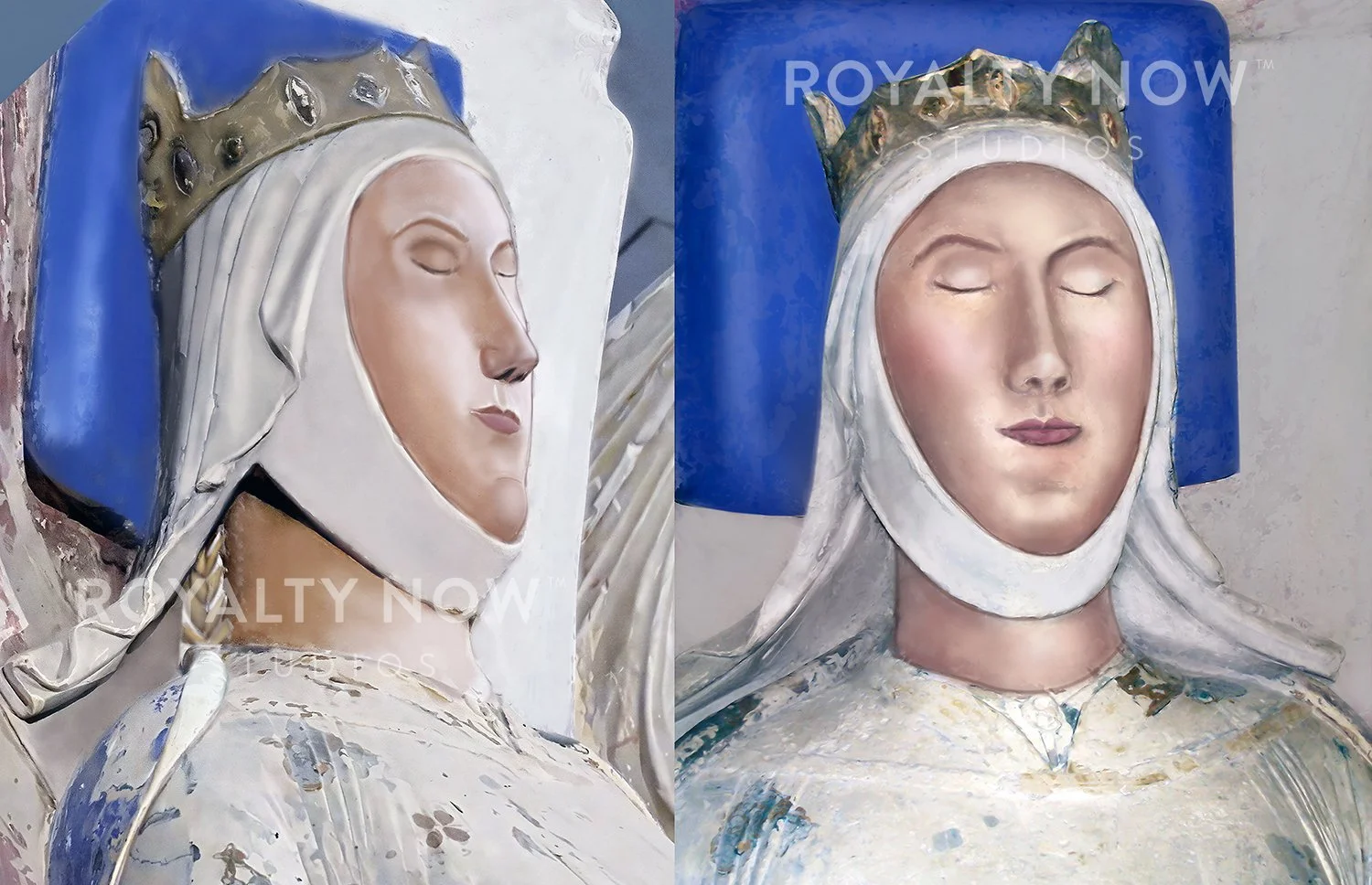
Some cartoon sketches I made from her effigy. Ignore the blonde braid in the one on the left - I thought I had solved a historical mystery but it turns out I just colored in part of her cloak ;)
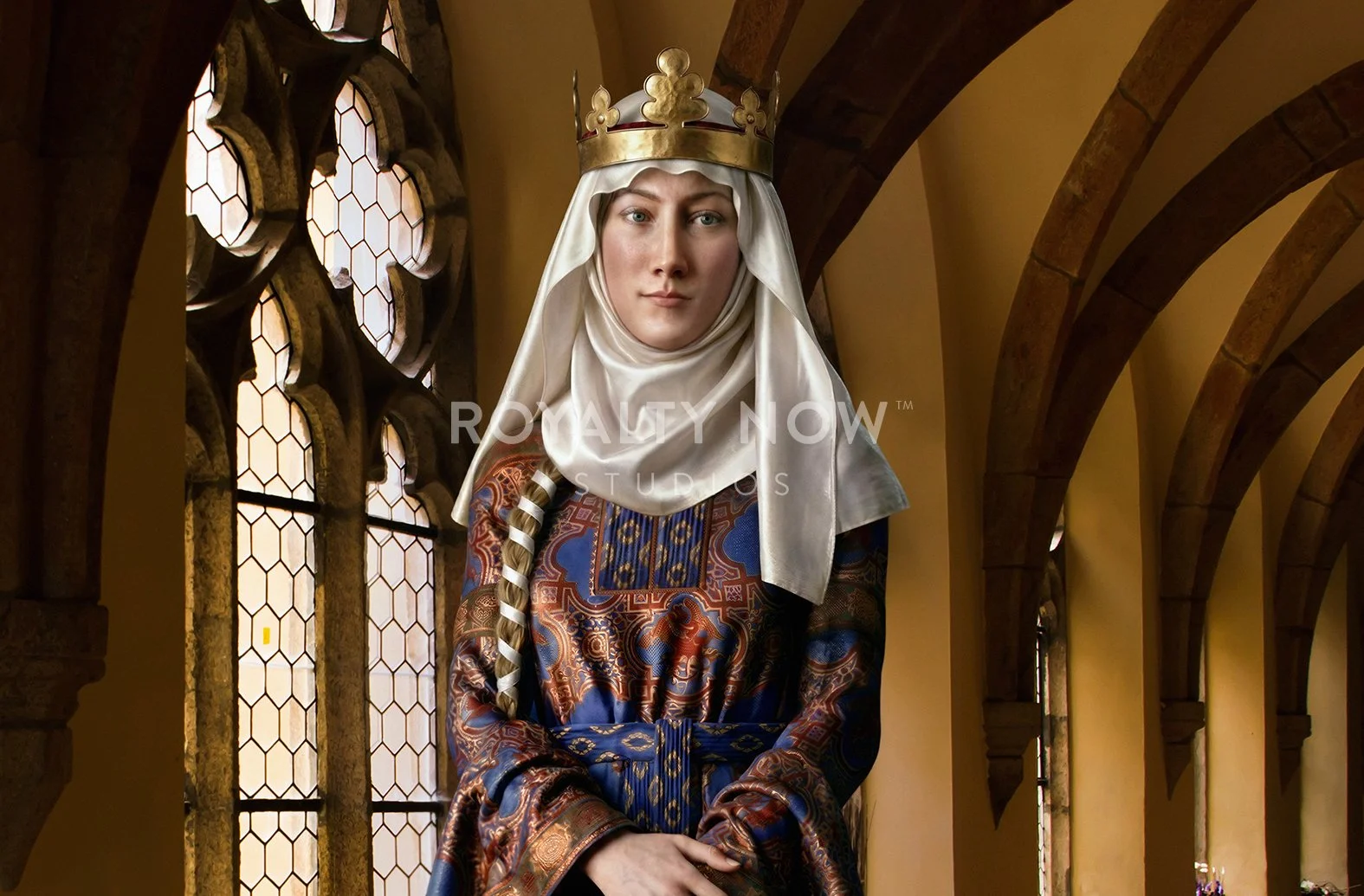
Eleanor in her full queenly get-up.
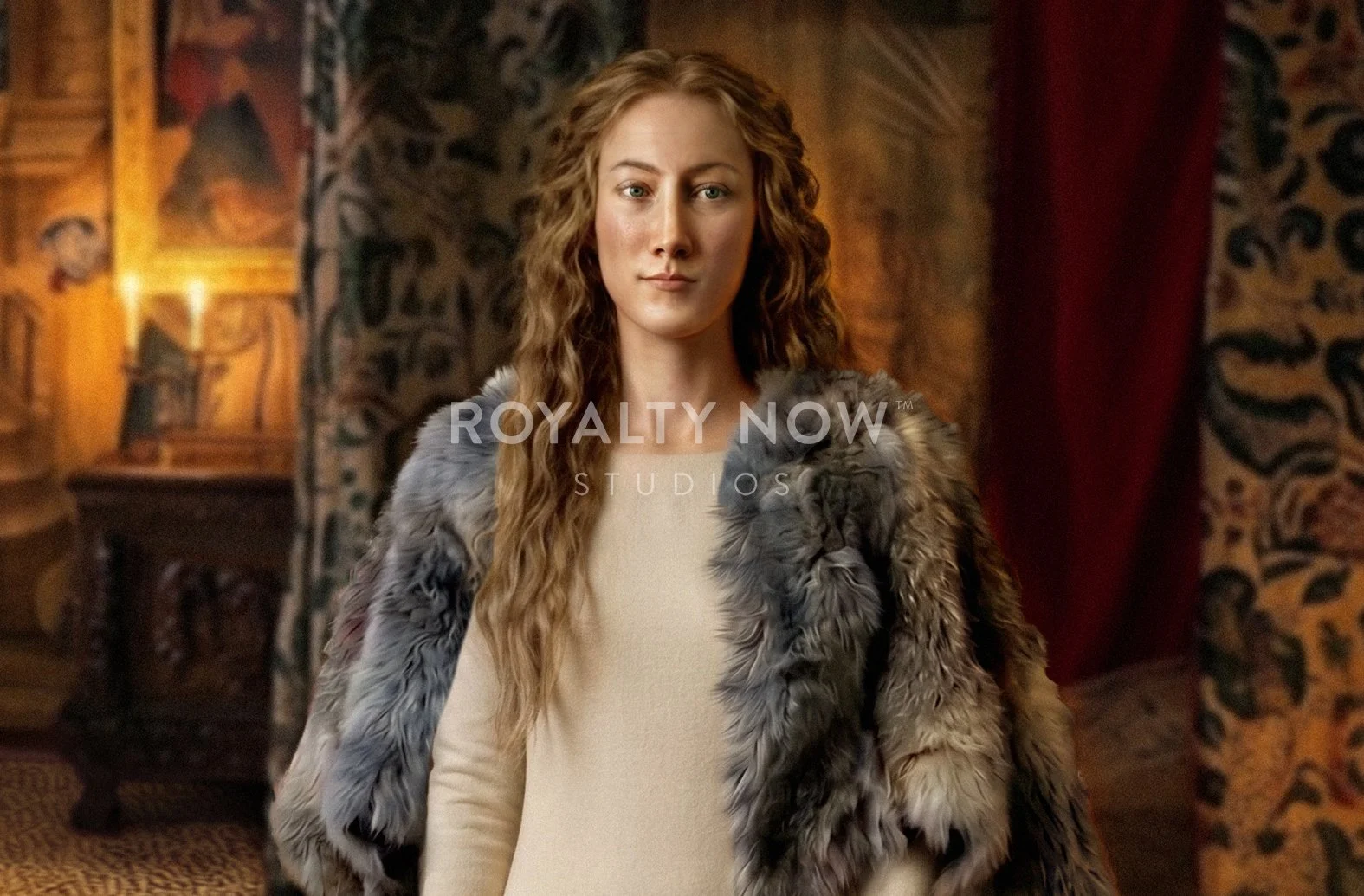
An image of Eleanor in her own chambers - wrapped in a fur cloak, hair down from her braids, wearing a simple linen shift.