
What did Elizabeth of York Look Like?
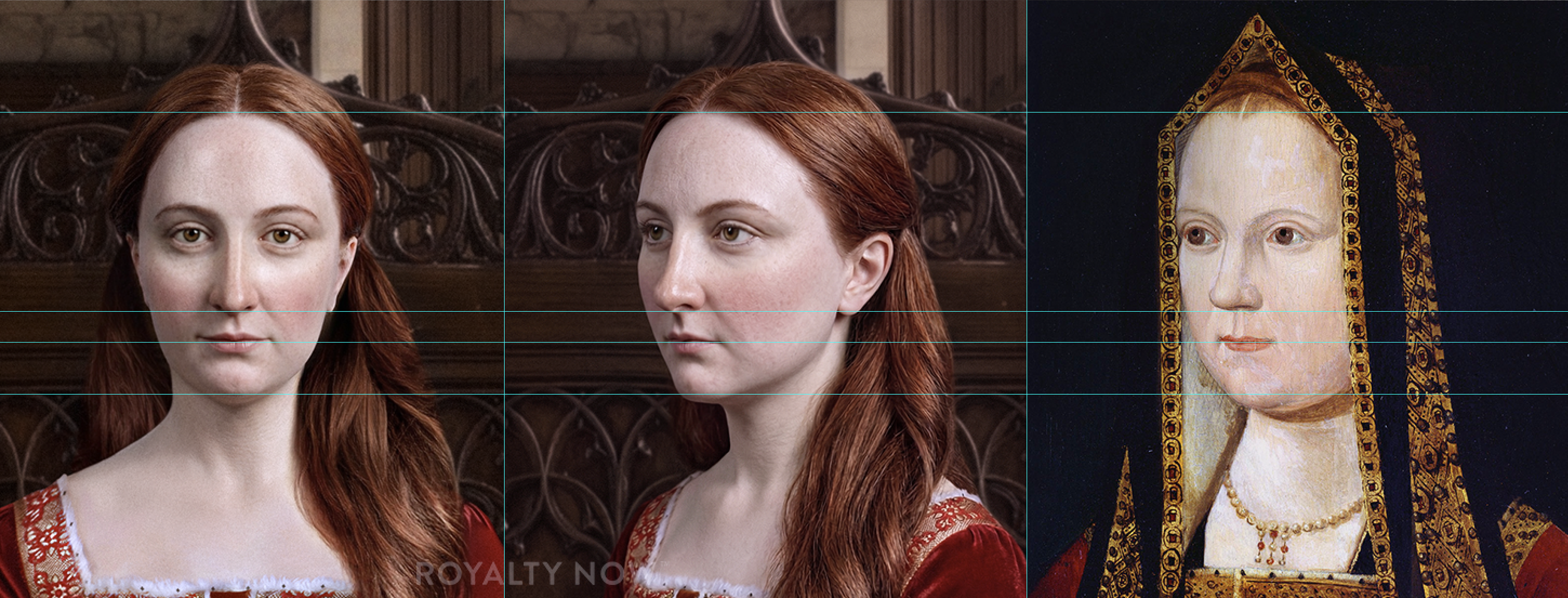
Scroll for all the versions at the bottom :)
Five hundred years ago, the Tudor dynasty was born — and with it came two of the most significant monarchs in English history. Henry Tudor was the last King of England to win his throne in battle, and his marriage to Elizabeth of York, the daughter of his greatest enemy, created a tentative peace in England for the first time in over thirty years.
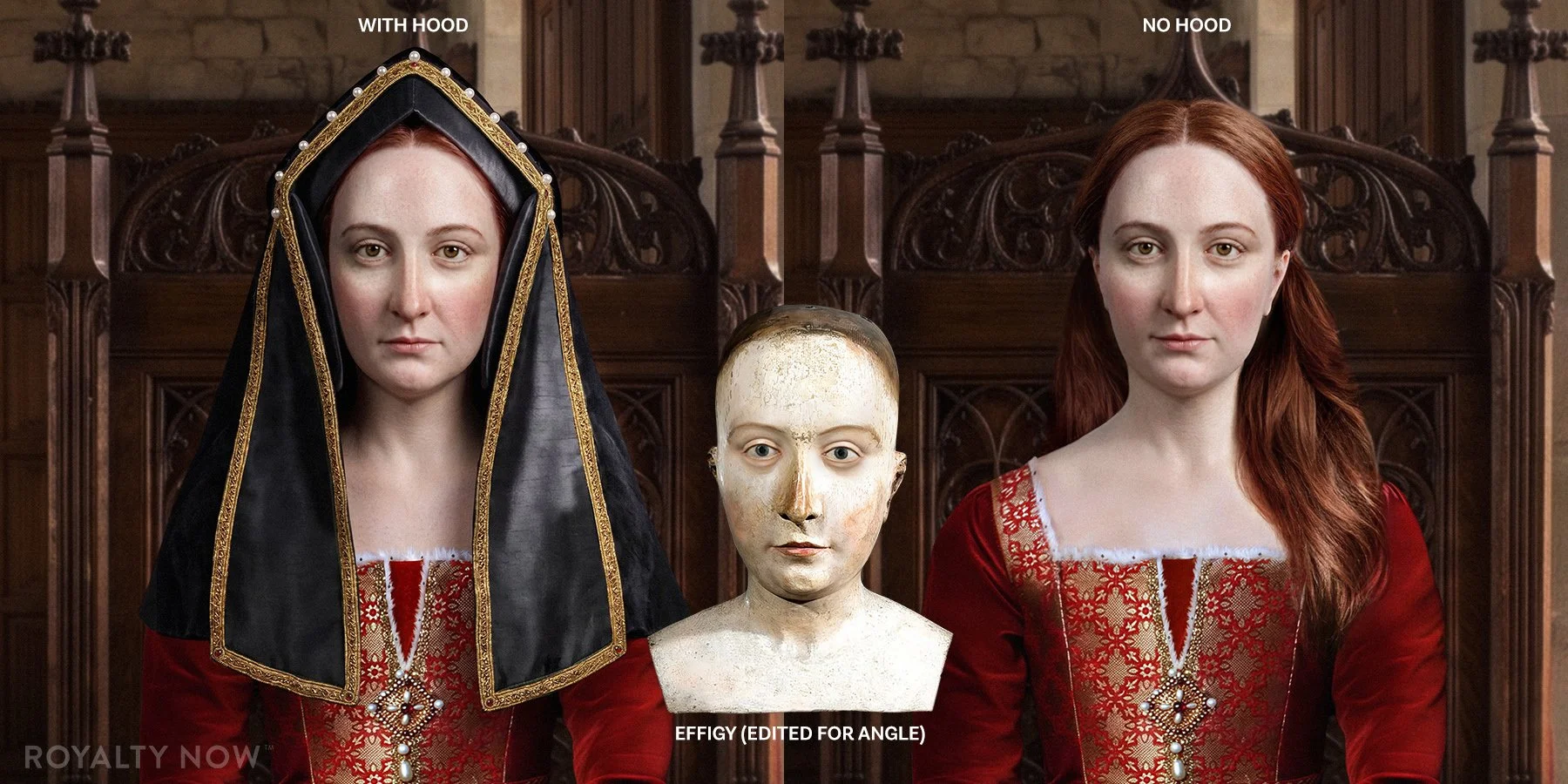
Today I want to focus on the face of the White Princess herself, Elizabeth of York, and try to answer a deceptively simple question: what did she really look like? It turns out to be much harder than it sounds. The answer takes us through painted propaganda, Renaissance bronze, and some truly remarkable sculptures that may carry her true likeness.
Who Was Elizabeth of York?
We won't go deep into her biography here, but a brief summary helps. Elizabeth was the eldest daughter of King Edward IV and his queen, the famously beautiful Elizabeth Woodville. She grew up in a world far from peaceful - the Wars of the Roses, the long series of battles between the houses of Lancaster and York, had been tearing England apart for decades.
When her father died suddenly in 1483, Elizabeth was just seventeen. Her two younger brothers, known to history as the Princes in the Tower, disappeared and were almost certainly murdered. Her uncle Richard III seized the throne and had Elizabeth and her sisters officially declared illegitimate. At nineteen, she didn't have much of a future.
Then Henry Tudor arrived, and defeated Richard III at the Battle of Bosworth Field in 1485. Part of Henry's claim to the crown had been his pledge to marry Elizabeth, which lent his cause added credibility. That promise transformed her from a political liability into the cornerstone of a new dynasty. Their marriage in 1486 united the houses of York and Lancaster, and it is from their union that the famous Tudor Rose takes its symbolism - the red of Lancaster and the white of York, joined as one.
Remarkably, these former enemies built a genuinely affectionate and happy marriage. The couple had seven or eight children, four of whom survived to adulthood, including the future Henry VIII. Sadly, Elizabeth died young - on her thirty-seventh birthday in 1503, from complications following the birth of her last child. Henry VII was said to be devastated. She was buried with great ceremony at Westminster Abbey, and it is there that we go looking for her true face.
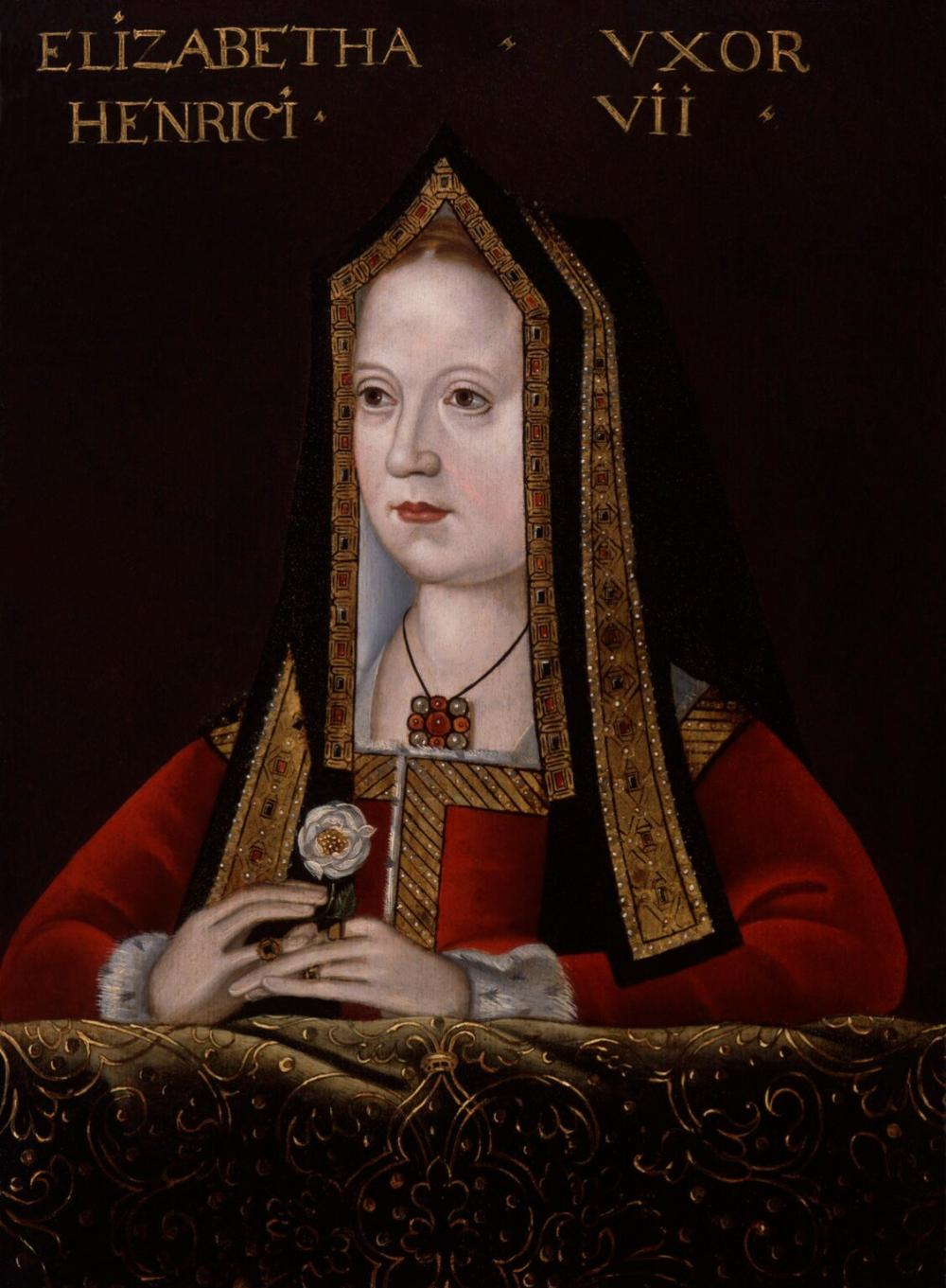
The National Portrait Gallery’s copy of Elizabeth of York.
The Problem With the Portraits
Let's begin with the paintings, because they present an immediate problem.
The most recognizable image of Elizabeth - the three-quarter view, white rose in hand, wearing a gable hood - survives in several versions, the finest of them in the Royal Collection. It's a competently painted, regal image. But the Royal Collection Trust's own catalogue notes that it probably dates to the mid-to-late sixteenth century, meaning it was made decades after Elizabeth's death. It is a copy of a lost original, not a contemporary likeness.
The likely source of that lost original was a 1502 commission given to the Flemish court painter Meynnart Wewyck, who was ordered to produce portraits of Henry VII, Elizabeth, and several of their children to be sent to Scotland ahead of Princess Margaret's betrothal to James IV. Those originals are presumed lost, and the surviving copies carry layers of later overpaint that make their reliability questionable.
The National Portrait Gallery's version of the portrait is described as a late sixteenth-century work based on an original of around 1500. Even if that underlying image descended from a life portrait, we can't be certain how faithfully it was copied or how many hands it passed through. In short, the painted record for Elizabeth is thinner and less reliable than it is for her husband. So where else can we look?
The Tomb and Funeral Effigies
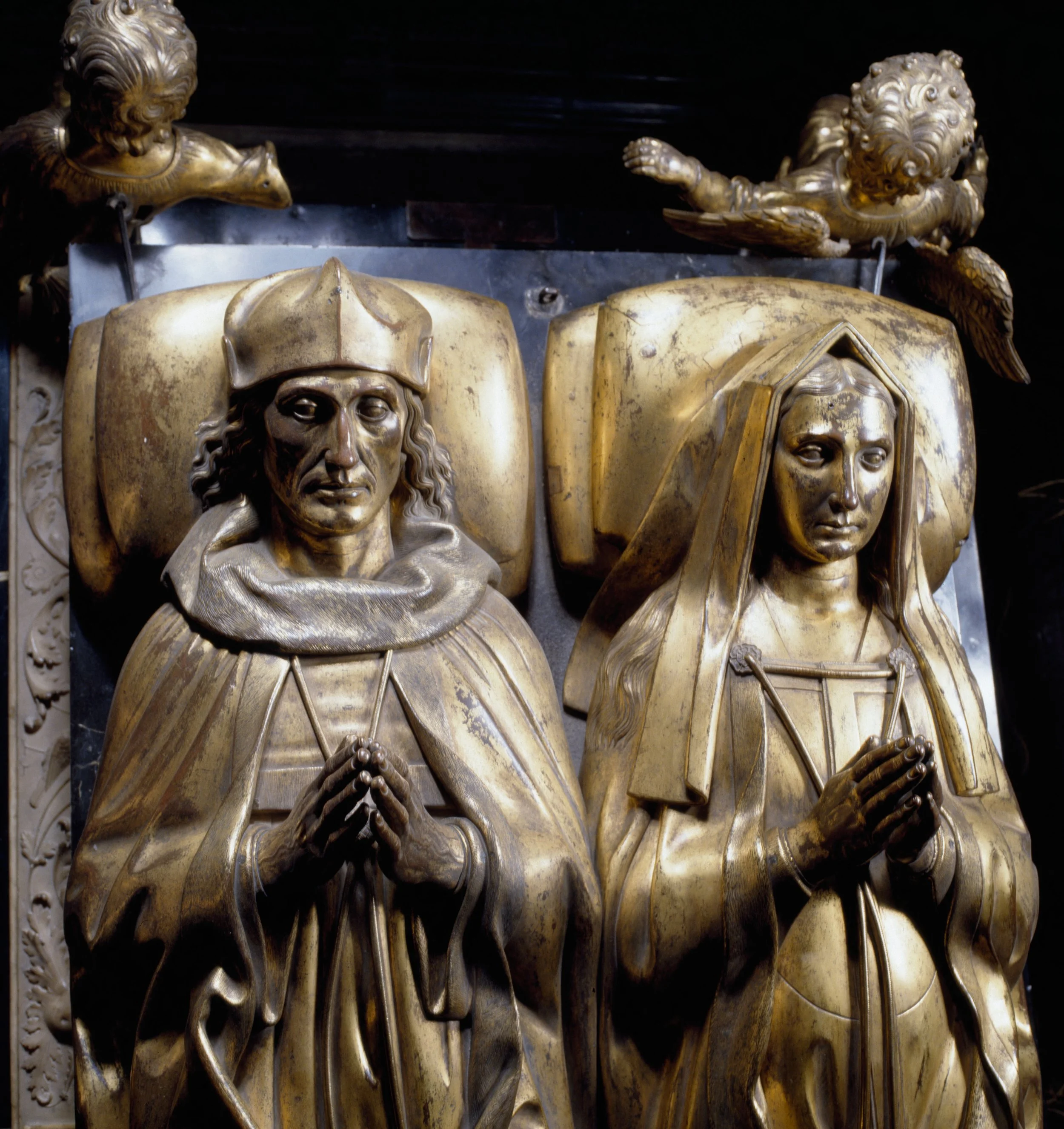
In Westminster Abbey's Lady Chapel lies the beautifully crafted joint tomb of Henry and Elizabeth. Henry VII, grieving, commissioned the chapel beginning in 1503, immediately after his wife's death.
The gilt bronze effigies atop the tomb were sculpted by Pietro Torrigiano, the brilliant Florentine Renaissance sculptor and one of the first Italian artists to work in England. We may even have Michelangelo's broken nose to thank for the work - legend has it that while Torrigiano was training alongside Michelangelo, a furious dispute ended with a broken nose for Michelangelo and Torrigiano deciding it was time to leave Italy. The sculptures were begun in 1512 under Henry VIII and finished in 1517.
The craftsmanship is astonishing - arguably finer than portraits of English monarchs generations later. The details are extraordinary: the precise fall of the drapery, the individually rendered faces, even the veins visible in the backs of their hands. Elizabeth lies alongside Henry, her features refined and serene. The curator of Westminster Abbey itself calls the tomb "startlingly realistic."
But how trustworthy are these as true portraits? Earlier medieval effigies were frequently idealized - generic figures sculpted years or decades after a subject's death, with little interest in individual likeness. The early Florentine Renaissance flipped that idea on its head. Individualized portraiture was now prized, and sculptors began working from death masks - plaster or wax casts taken directly from a subject's face - to achieve lifelike accuracy.
We know Henry's tomb effigy was crafted from such a mask. The V&A's painted terracotta bust of Henry, also by Torrigiano, is described in the museum's own catalogue as combining a face probably cast from a mould taken from the king's cadaver.
For Elizabeth, the picture is different. It's not believed that any death mask was taken of her, probably because her death was so unexpected. The bronze figure on her tomb doesn't have much in common with the features in her portraits and appears to be idealized.
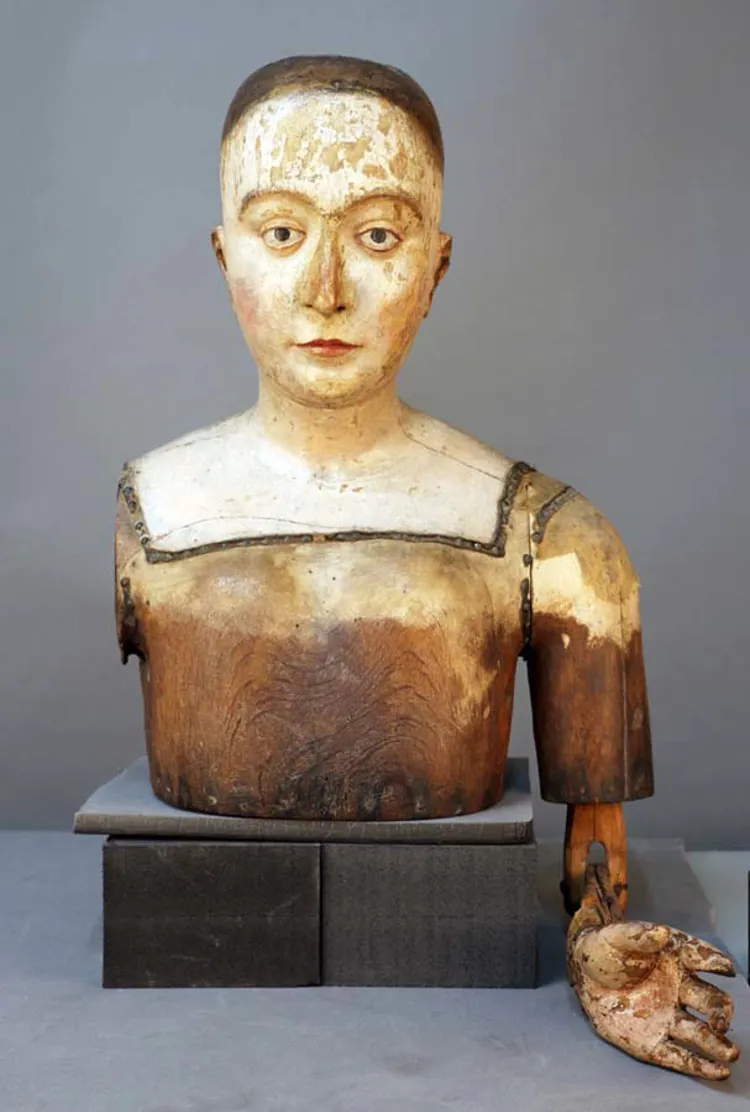
Elizabeth’s wooden funeral effigy. You can see how damaged it was in the Blitz during World War II.
Luckily, there is another version - a wooden effigy that was carried through the streets of London for her funeral. Henry VII would have overseen its creation, which makes it the most likely candidate for her real appearance. Today it survives only in rough shape: it came through the Blitz in pieces, leaving the torso, one arm, and a hand. Originally it would have been painted and clothed, with real human hair used to mimic Elizabeth's own. We will never see it in its full glory again. It lacks the compelling forensic quality of Henry's, but it is what I used to build my reconstructions of Elizabeth.
What Did Her Contemporaries Say?
Genuinely contemporary physical descriptions of Elizabeth of York are almost nonexistent. Much of the vivid detail you'll find online is later embellishment, material muddled up with descriptions of her granddaughter Elizabeth I, or - in many cases - lifted directly from Philippa Gregory's novels.
If we trust the portraits, she had red or possibly strawberry-blonde hair. She is said to have been tall like her father, Edward IV, and beautiful like her mother, Elizabeth Woodville, standing around 5'6" at a time when most women were considerably shorter. The descriptions that do survive from her lifetime tend to dwell on her character rather than her features - virtuous, charitable, pious, the usual royal praise. By all accounts she was a beloved queen: cherished by her subjects, her husband, and her children.
The fashion of the era is worth picturing, too. This was the age of the square neckline and tight sleeves, with gowns often trimmed in jewels and ermine. Europe's silk and velvet markets were well established and booming, making royalty look even more luxurious than before. The V-neck Burgundian style worn by Elizabeth's mother gave way to the plainer square neck we see in Elizabeth's portraits. And the gable hood - emerging around 1480 and worn often by Elizabeth - became one of the defining (and, in my opinion, least flattering) trends of the period.
The Reconstruction
So, in an attempt to bridge five centuries of mystery, I built my own carefully considered approximation of her face - the closest we can honestly get to the woman who helped end the Wars of the Roses, and whose descendants still sit on the British throne today.
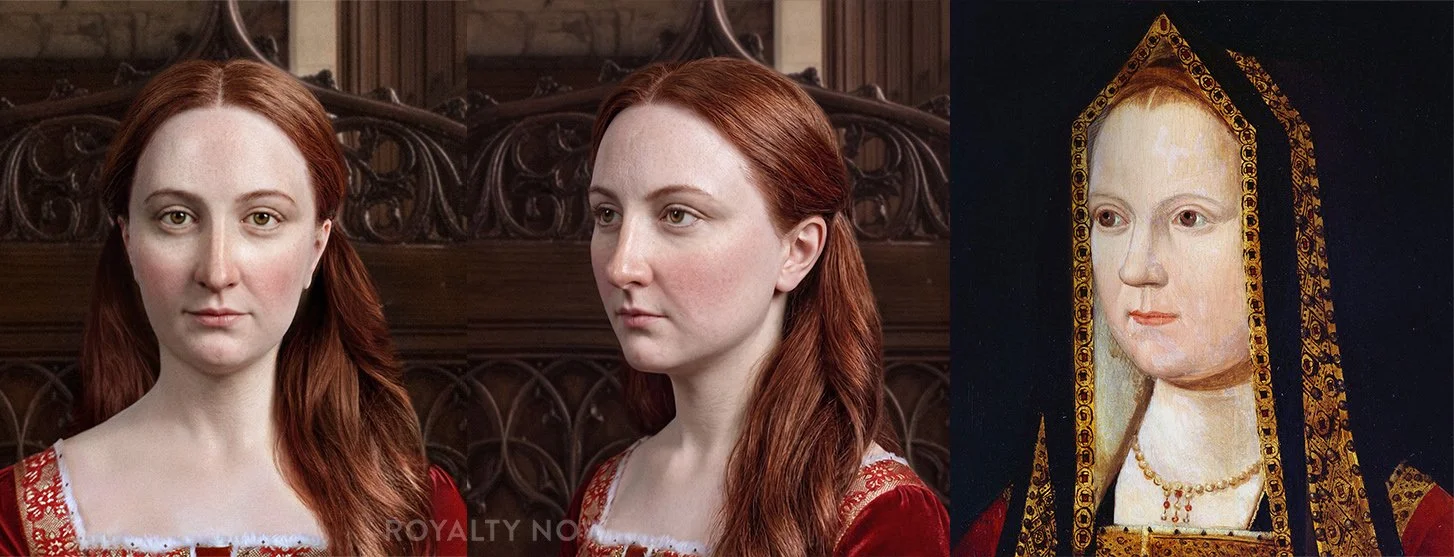
Front-facing and three-quarters view compared with what is believed to be the earliest copy of Elizabeth’s portrait. It’s not a direct 1:1, but you can see how a portrait artist could get to what we see on the right.