
What did Lucrezia Borgia really look like?
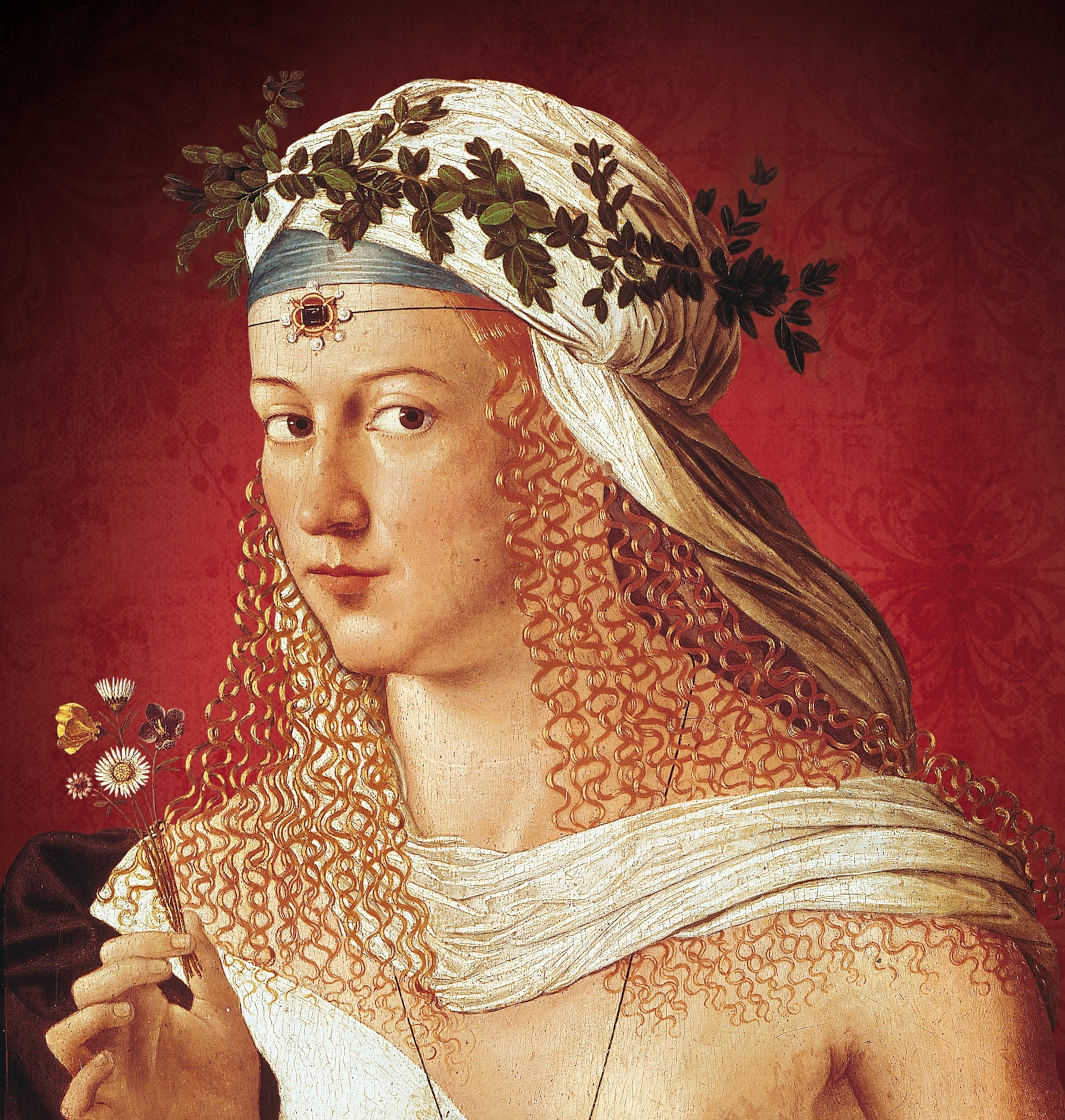
Portrait of woman by Bartolomeo Veneto, thought by some to be Lucrezia.
Despite her family's immense wealth and her father's status as pope, surprisingly few depictions of Lucrezia exist. There are some from her time, but none are confirmed - which, given how prominent she was, feels like a strange gap in history. Full video here.
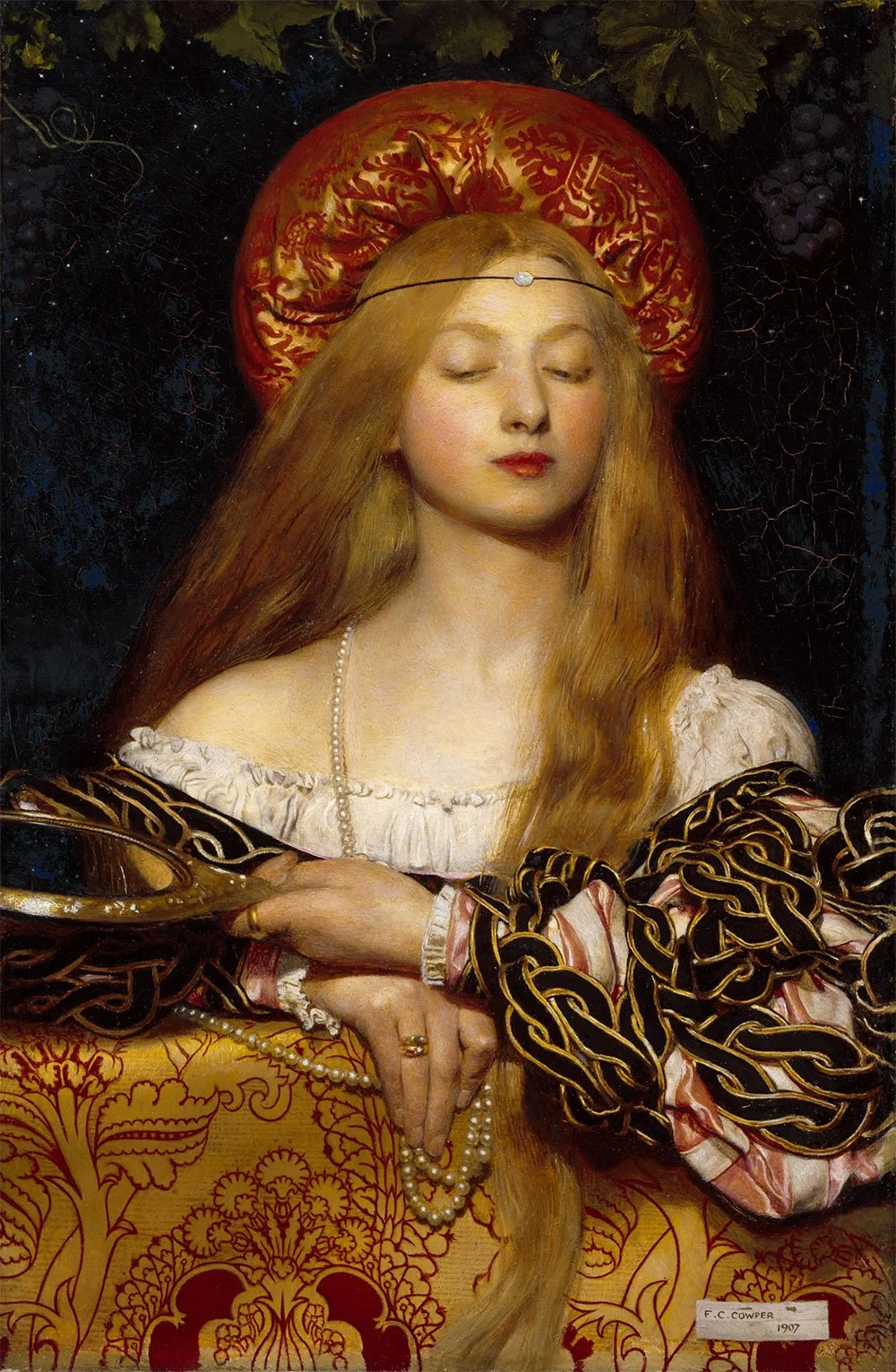
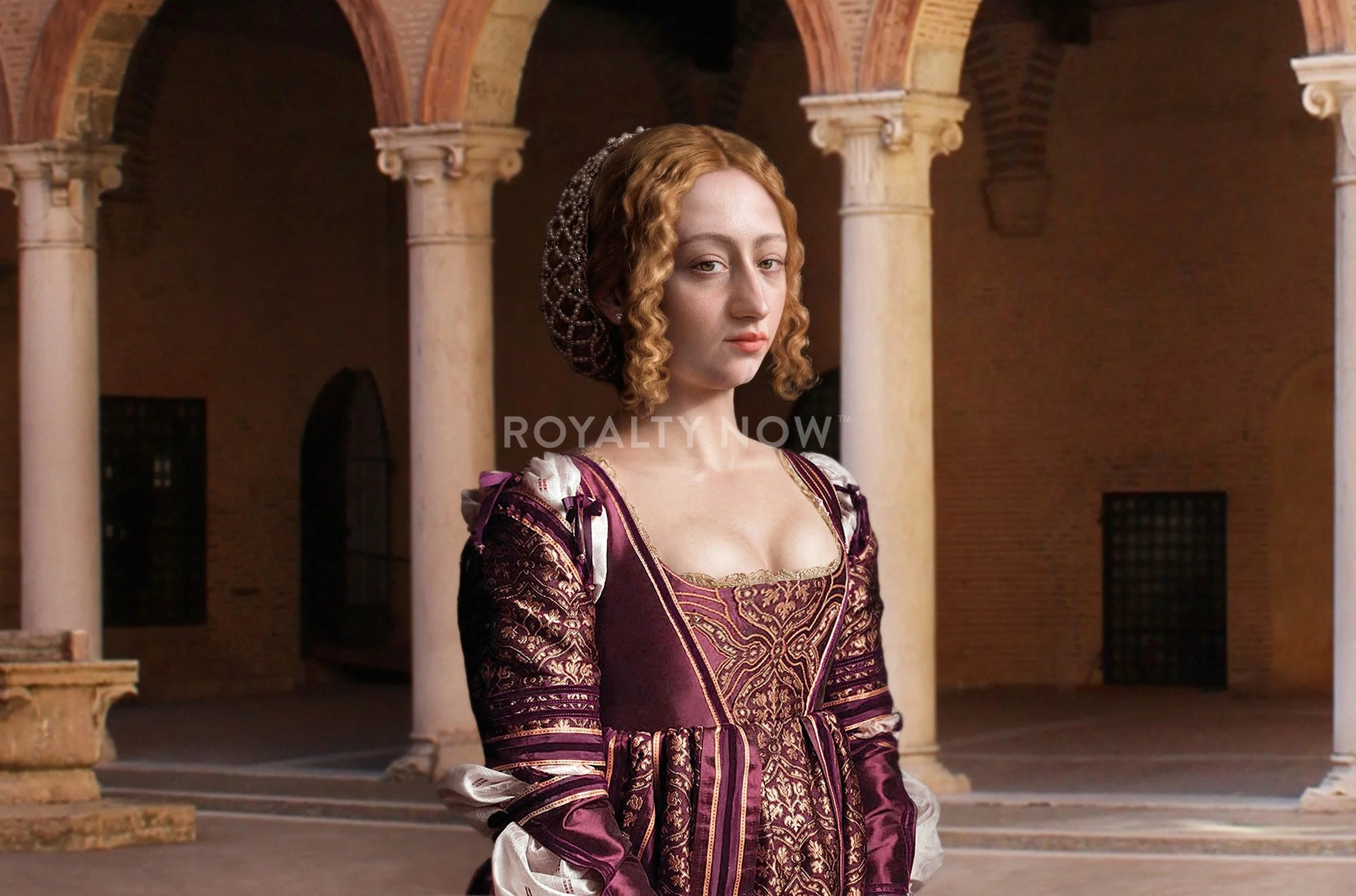
What we do know is that her hair was central to her image and allure. She had very long, curly golden or reddish hair, a beautiful complexion, light hazel eyes, and a natural grace that more than one contemporary commented on. Niccolo Cagnolo da Parma recorded more specifics: that she was an average height, with a long face, a prominent nose, and a large mouth.
Looking at portraits of both her parents — her father with his robust features, her mother with her more delicate — Lucrezia seems to have landed somewhere in between.
Now, the most famous image associated with her — the one that comes up first when you Google her — is a painting by Bartolomeo Veneto (at the top of the article). He worked at the Ferrara court during her time there, which is why scholars connect this image to Lucrezia. But the exposed breast would have been unthinkable for a woman of her status to commission. Stunning as it is, it's likely not her.
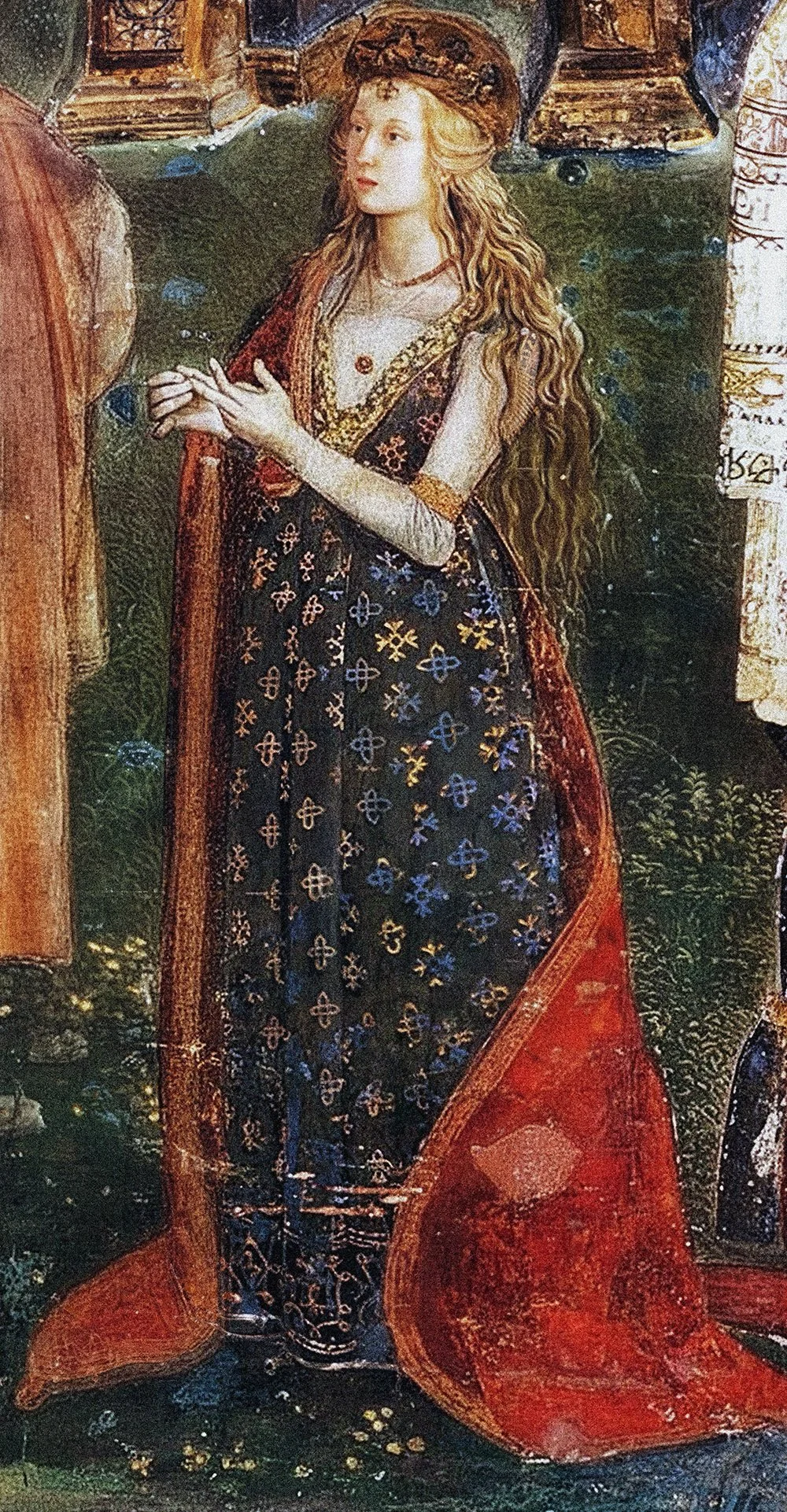
Fresco at the Borgia apartments.
A more convincing candidate is this fresco in the Borgia apartments at the Vatican, thought to show Lucrezia at around 12 or 13. It’s painted right as her family's influence was exploding and her father had just become pope. It's stylized and a little damaged, but the timing makes it a credible likeness.
Then there's this painting by Dosso Dossi, which the National Gallery of Victoria claims to have discovered as the first authenticated portrait of Lucrezia. We know that Dossi was in Ferrara between 1515 and 1520, which lines up with her time there as duchess — meaning if it is her, it was painted very close to the end of her life.
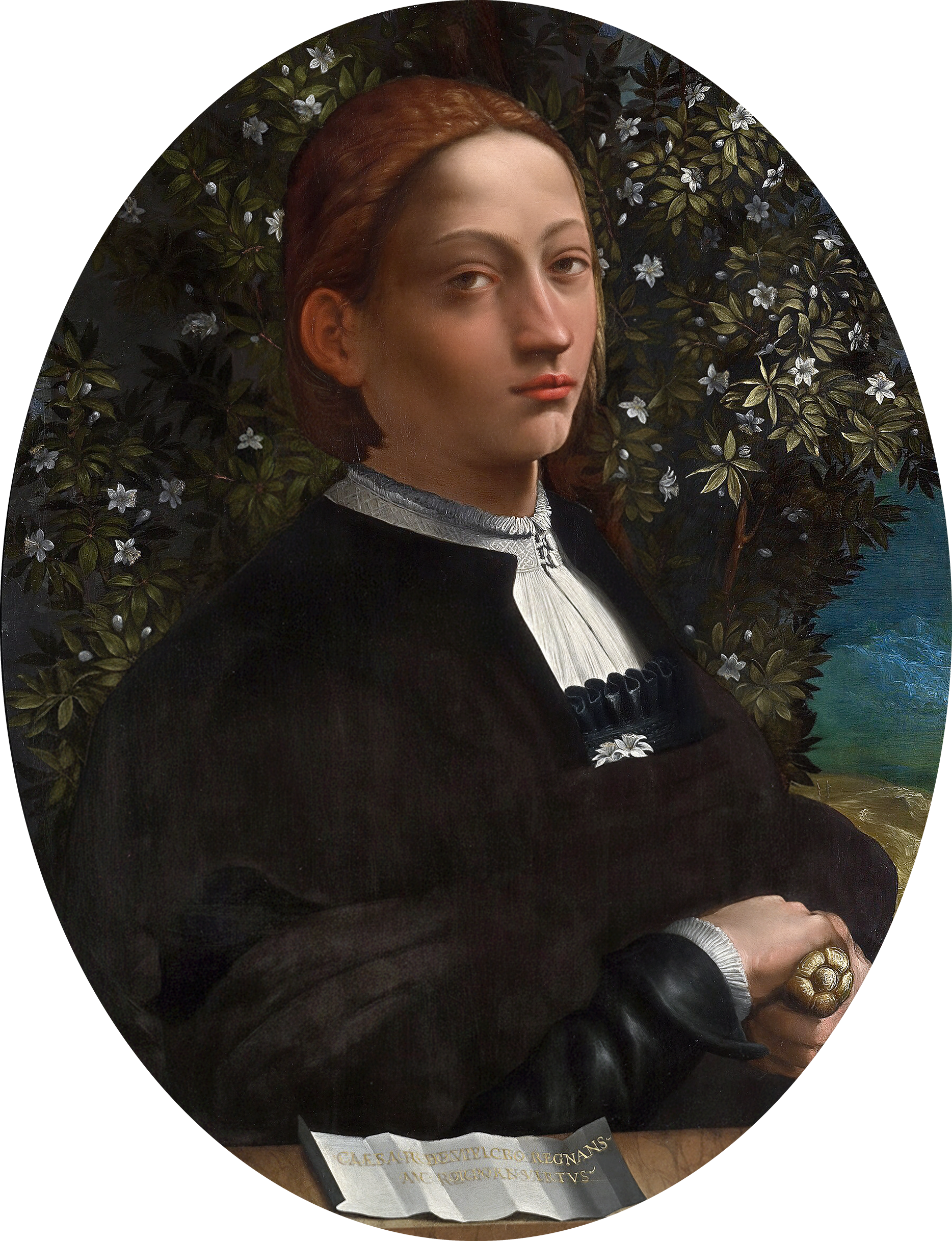
Portrait of a Youth by Dosso Dossi, thought to be Lucrezia Borgia.
For years it was assumed to be a portrait of a young man, because of the outfit. But historians point to the symbolism: the dagger references the Roman woman Lucrezia; the myrtle bush, representing Venus, would only appear in a woman's portrait; and the inscription reads, "Brighter than beauty is the virtue reigning in this beautiful body" — which, knowing her story, feels quite pointed. Scholars still debate this one, but I've used it as the basis for my re-creations.
The one thing that gives me pause here is the hair — it reads as a deep, rich red, which doesn't quite match accounts of her golden hair. Perhaps the varnish has darkened over time, or perhaps "gold" in the Renaissance covered a broader range of shades than we might assume.
From a portrait medal made during her lifetime, we know Lucrezia favored the coazzoni hairstyle — a long center-parted braid with a jeweled hair net and plenty of accessories. And pearls — Lucrezia is mentioned wearing them so frequently they almost became part of her identity.
One of the things I love about Renaissance fashion is how much room women had for self-expression. No uniform, no rigid rules — each woman dressed and adorned herself how she wanted.
So while her reputation may carry a certain darkness, in terms of pure appearance, Lucrezia Borgia seems to have been exactly what the Renaissance prized most: golden, graceful, and luminously composed.
Let's see her brought to life, now:
.jpg)
